

The prophets Joel, Zephaniah, Amos, and Hosea in St. Mary’s Church in Fairford, England.
“So let us know, let us press on to know the LORD. His going forth is as certain as the dawn; And He will come to us like the rain, Like the spring rain watering the earth.” (Hosea 6:3)
The book of Hosea is the ultimate love story. In it, the prophet both models God’s love for His people and laments the grave sins of the nation of Israel.
While reading the rebukes and lamentations of Hosea, it may be impossible to not think about some parts of present-day Israel.
“Hollywood’s new billion dollar sin city,” declared Hollywood Reporter, is none other than Tel Aviv.
Tel Aviv is often referred to as “the gay capital of the Middle East” and a number of publications have crowned it the “world’s best gay city”.
Not the kind of place you would want to raise your kids.

Gay pride in Israel.
Nevertheless, Tel Aviv’s mayor, Ron Huldai, seems to be quite happy about it. Being more concerned about the “inclusiveness” of such an atmosphere and drawing tourism and a high-tech workforce to the city, he said he is proud of the results of the vote.
On his Facebook page, the mayor wrote, “Victory in this competition further highlights the fact that Tel Aviv is a city that respects all people equally, and allows all people to live according to their values and desires. This is a free city in which everyone can feel proud, and be proud of who they are.” (Daily Mail)
While this kind of pride might seem the height of sin, which is the downfall of any nation, life in the northern tribes of ancient Israel under Jeroboam II in the eighth century BC saw even greater degradation.
Hosea describes it as follows:
“Hear the word of the Lord, you Israelites, because the Lord has a charge to bring against you who live in the land: ‘There is no faithfulness, no love, no acknowledgment of God in the land. There is only cursing, lying and murder, stealing and adultery; they break all bounds, and bloodshed follows bloodshed.’” (4:1–3)
Mixed with Hosea’s words of judgment, however, are promises of a glorious future for Israel if the people would only return to the Lord: “Return, Israel, to the Lord your God. Your sins have been your downfall!” (14:1)
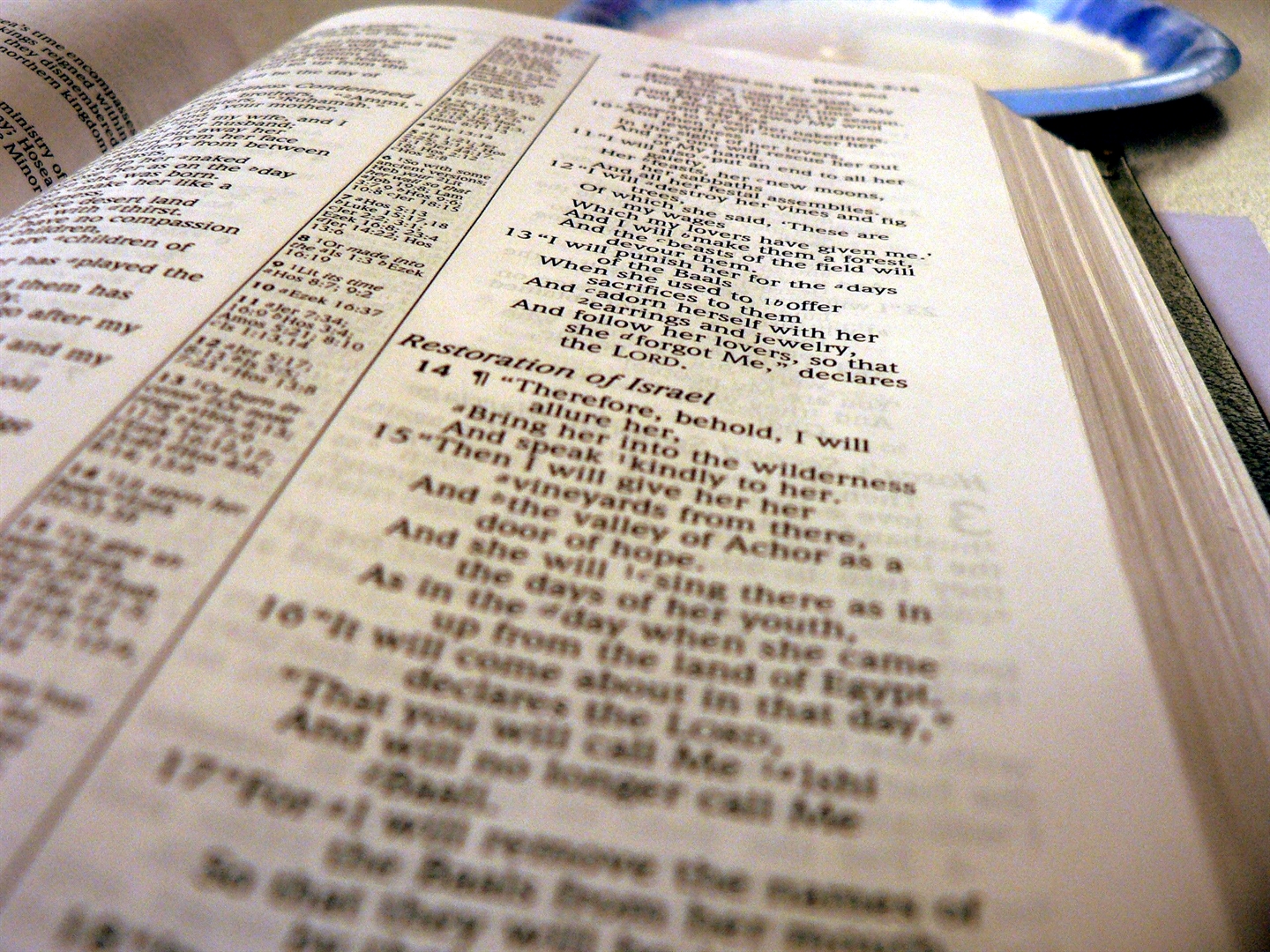
Hosea
In Hosea, the people are assured that things would turn around if they would confess their sins, return to the Lord, and renounce their dependence on foreign gods:
“I will heal their waywardness and love them freely, for my anger has turned away from them. I will be like the dew to Israel; he [Israel] will blossom like a lily. Like a cedar of Lebanon he will send down his roots.” (14:4–5)
Hosea also warns Israel to not depend on the strength and support of foreign powers or even the people’s own abilities to make war. He asks the people to confess —“Assyria cannot save us; we will not mount warhorses.” (14:3)
God alone will save His people and not by means of conventional weapons.
He says about Judah, “I will have compassion [racham] on the house of Judah and deliver them by the LORD their God, and will not deliver them by bow, sword, battle, horses or horsemen.” (1:7)
Hosea’s words are equally relevant today as then. When we turn from sin to serve the Lord, and trust in Him rather than our own strength, we find we have everything we need for victory.
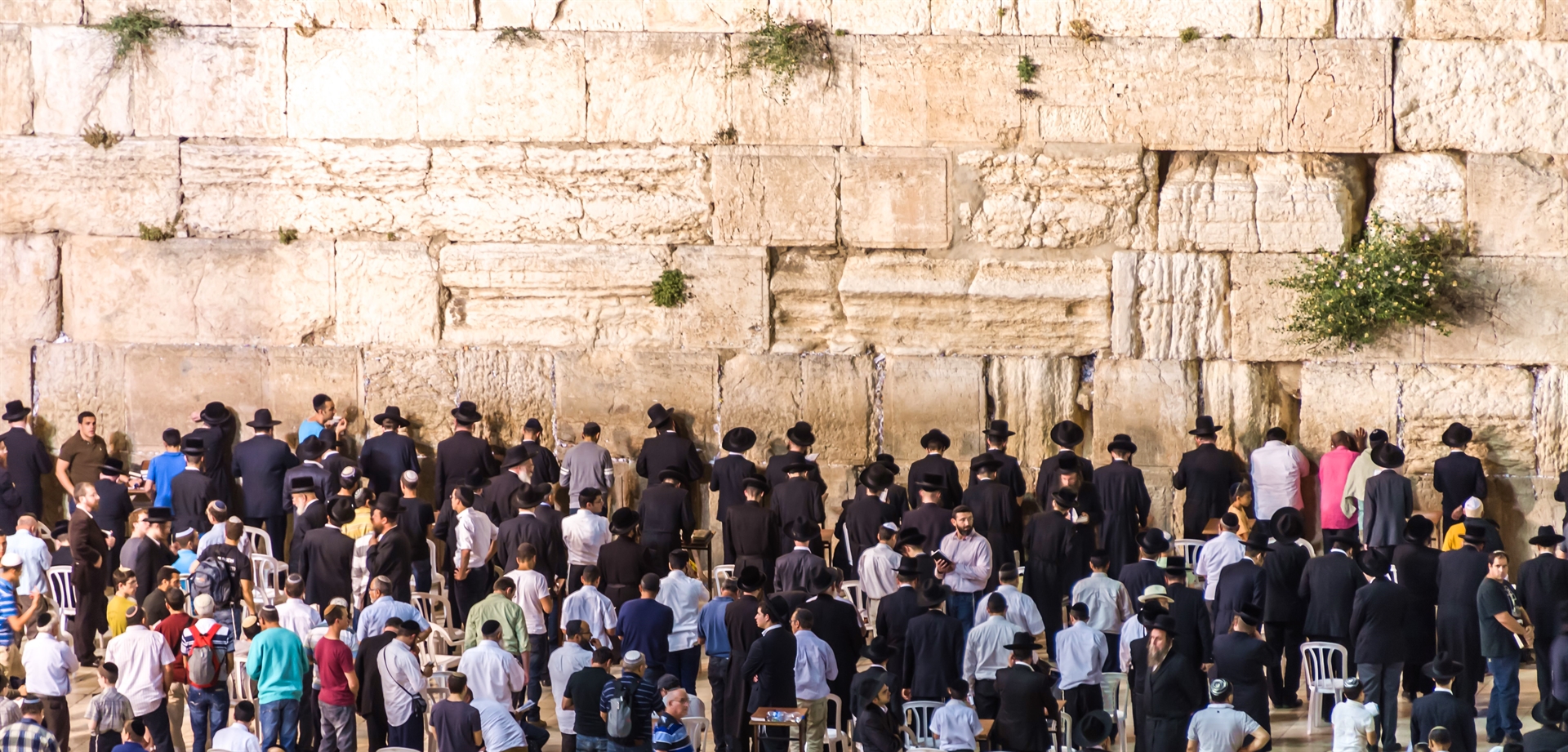
Jewish men pray in the men’s section of the Kotel (Western or Wailing Wall).
Symbolism in Hosea
“When the LORD began to speak through Hosea, the LORD said to him, ‘Go, marry a promiscuous woman and have children with her, for like an adulterous wife this land is guilty of unfaithfulness to the LORD.'” (Hosea 1:2)
Little is known about Hosea or of his social status; nevertheless, we are provided some astonishing details about his life and the lengths to which he went for love.
In verse two of chapter one, God tells him to marry a harlot and have children with her. Adonai compares her harlotry to Israel’s, saying that His people are “guilty of unfaithfulness to the LORD.”
And so Hosea marries Gomer.
Just as the prophet Ezekiel dramatized the coming destruction of Jerusalem for all to see, Hosea’s life becomes a dramatic representation of God’s relationship with Israel: his wife’s actions are symbolic of Israel’s following after pagan gods. (Ezekiel 4; Hosea 1:2–3)
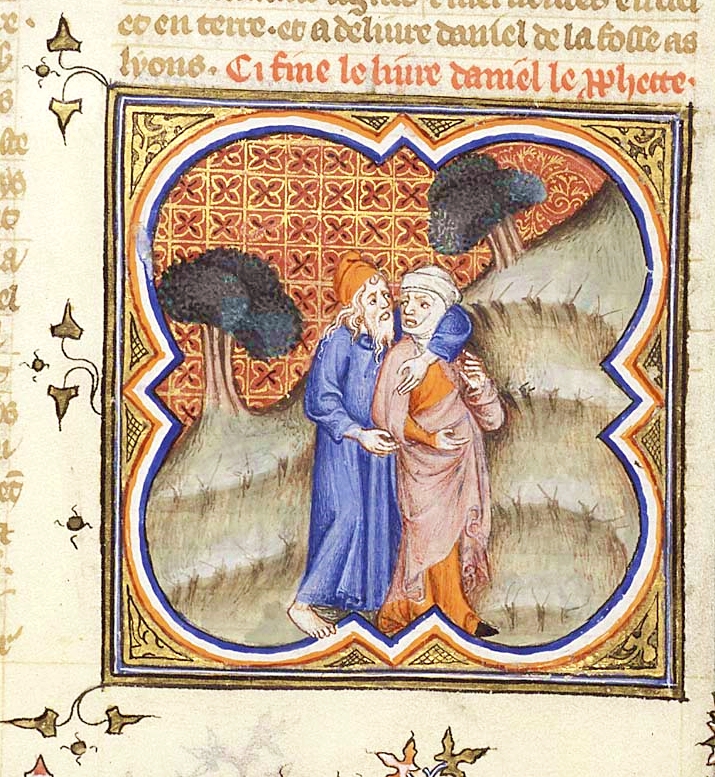
Hosea and Gomer (Bible Historiale, 1372)
And just as God refuses to abandon His people Israel, God tells Hosea not to leave his wife.
When Gomer leaves Hosea for another man, he takes her back and lovingly forgives her.
To illustrate the strain on the relationship, however, God gives Hosea’s children symbolic names.
Hosea’s daughter’s name, Lo-ruhamah, comes from the Hebrew words lo, meaning no and racham, meaning compassion or mercy. Adonai tells Hosea, “Name her Lo-ruhamah [no mercy], for I will no longer have compassion [racham] on the house of Israel, that I would ever forgive them.” (1:6)
Similarly, Hosea’s son is named Lo-Ammi, which means not my people. In connection with this name, God says,
“For you are not My people [lo-ammi], and I am not your God. Yet the Israelites will be like the sand on the seashore, which cannot be measured or counted. In the place where it was said to them, ‘You are not My people [lo-ammi],’ they will be called ‘children of the living God.’ The people of Judah and the people of Israel will come together; they will appoint one leader and will come up out of the land, for great will be the day of Jezreel.” (1:9–11)
This would seem to be a reference to the end times and the establishment of God’s millennial kingdom on earth under the authority of the risen Messiah.
Alternatively, it could even refer to the establishment of modern day Israel and the election of a prime minister who leads the entire nation. Either way, these are definitely words of encouragement.

A Jewish mother and son have fun together on a beach in Israel.
Hosea and God’s Love for His People
The idea of love as presented in the Bible is usually seen as being concentrated in the Brit Chadashah (New Covenant).
In fact, many separate the two covenants into two spirits, saying that the Brit Chadashah is of grace and love while the Tanakh (Old Covenant) is of judgment and vengeance.
Paul, a scholar of the Tanakh, however, taught us the true nature of love when he wrote 1 Corinthians 13. He said that “love never fails. … And now these three remain: faith, hope and love. But the greatest of these is love.” (vv. 8, 13)
The primacy of love is at the heart of the Tanakh. And love is certainly at the heart of this prophet of God. While Hosea does not represent the Jewish People’s love for God, he does emphasize God’s love for His people.
The very fact that God had sent His prophet Hosea to warn His people is a sign that God still loved His people no matter how wayward they had become.

Mountain Landscape with River Valley and the Prophet Hosea, by Gillis vanKoningsloo
According to Britain’s chief rabbi, Lord Jonathan Sacks, the entire history of Israel is a love story between a faithful God and a faithless people.
Rather than rejecting Israel for its immorality, God emphasizes His eternal love and holiness:
“I will betroth you to me forever: I will betroth you in righteousness and justice, in love and compassion. I will betroth you in faithfulness, and you will acknowledge the Lord. In that day I will respond, declares the Lord — I will respond to the skies, and they will respond to the earth; and the earth will respond to the grain, the new wine and the olive oil, and they will respond to Jezreel.” (2:19–22)
God says that Israel will no longer refer to Him as “Ba’al” but as “Ish.” (2:16)
In the marriage relationship, the title ba’al refers to the husband and means master/ owner. This is a play on words since the people worshiped the pagan storm god, Ba’al.
Adam called his wife, the first woman, Isha because she came forth from Ish (husband/ man). (Genesis 2:23)
Ish and Isha represent a relationship of two equals rather than one powerful figure over another. Rabbi Sacks said that this also illustrates God’s relationship with humankind — not through force but through love and mutual understanding.
The covenant of marriage is replicated in the covenant between God and Israel; it is meant to be one of love and mutual understanding and respect. (Aish)
Likewise, people everywhere are to love one another and operate through mutual understanding and respect rather than through dominance and power.

An Israeli bride (Israel Tourism photo by Dave Temple)
The idea of two equals also underscores the importance of the marriage relationship being of one husband and one wife. Polygamy, Rabbi Sacks wrote, is akin to adultery — the kind of relationship Israel had with God.
Through Hosea’s longsuffering love for Gomer, Israel could vividly witness the persistent, redeeming love of God. Hosea portrayed the true and better relationship available for Israel, if they would only choose it.
In its simplest form, the story of God’s relationship with Israel can be summed up in three stages:
- God loved Israel with a persistent, loyal, covenantal love (chesed);
- Israel had spurned that love through their sinning; and
- Even though God’s love had been spurned, He still loved His people Israel.
Moses explained this love in Deuteronomy 7:7–8, when he told the people that God did not choose them because of their greatness; in fact, they were the fewest of all peoples. He chose them, instead, simply because of His love for them and because of His oath to Abraham — His faithfulness.
God’s love is unconditional. It is totally relentless despite Israel’s misdeeds.
From Hosea we also learn three things about God’s persistence and loyalty:
- God’s discipline is evidence of His loyalty.
- The goal of God’s loyalty is not to destroy Israel but to restore her. As Hosea took back Gomer, so God would take back His people Israel.
- Repentance is the response to His loyalty. God called Israel to turn around and come back to Him (6:1–3, 14:1–3); in a sense, leaving the door open for the estranged wife to come back home.
Despite this, we understand from Hosea that we cannot avoid reaping what we sow. If we sow wickedness we will reap punishment (10:12–13).
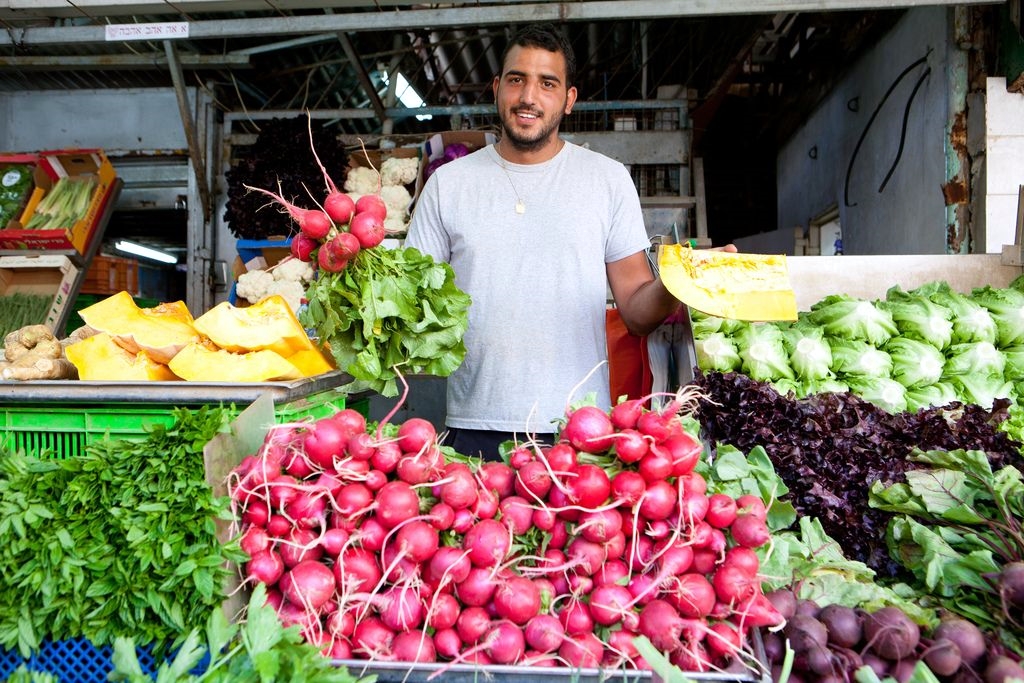
The Carmel Market in Tel Aviv (Israel Tourism photo)
Hosea and the Messiah
Hosea contains a bright promise that will be fulfilled in the Last Days:
“For the Israelites will live many days without king or prince, without sacrifice or sacred stones, without ephod or household gods. Afterward the Israelites will return and seek the LORD their God and David their king. They will come trembling to the LORD and to His blessings in the last days.” (Hosea 3:4–5)
Because of sin, Israel would be deprived of independent self-government, princely leadership, Temple, and sacrifice for a period of time.
Despite this, God’s people have a bright future that the entire world will witness: a reversal of this horrible, but temporary status.
In 1948 Israel regained independent self-governing status among the nations, though not all of its people are seeking the Lord yet. Even so, we are eyewitnesses to the partial fulfillment of Hosea’s prophecy (see also Isaiah 66:8).
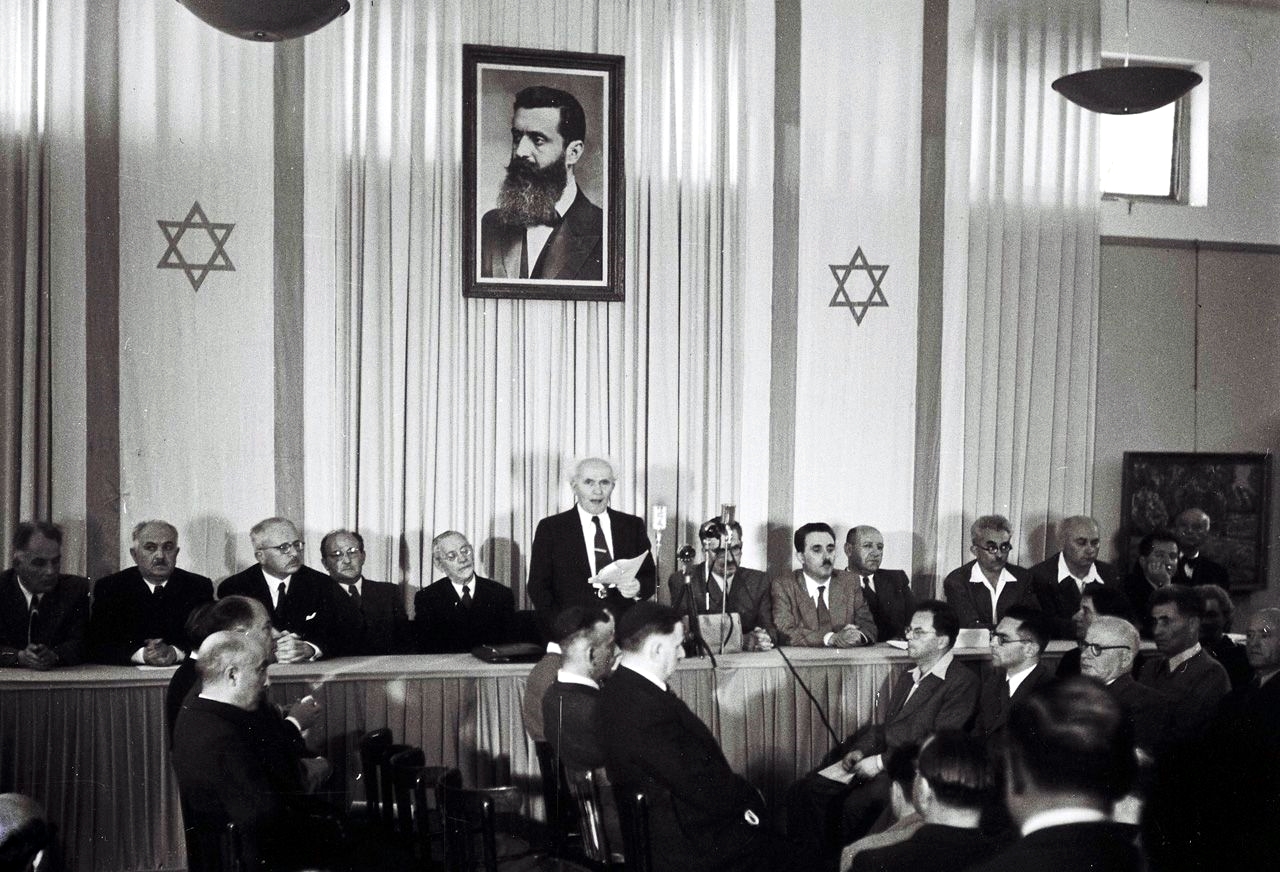
On May 14, 1948, on the day in which the British Mandate over Palestine expired, the Jewish People’s Council gathered at the Tel Aviv Museum and approved the establishment of the State of Israel.
On May 14, 1948, on the day in which the British Mandate over Palestine expired, the Jewish People’s Council gathered at the Tel Aviv Museum and approved the establishment of the State of Israel.
Hosea 6:1–2 also promises: “Come, let us return to the Lord. He has torn us to pieces but He will heal us; He has injured us but He will bind up our wounds. After two days He will revive us; on the third day He will restore us, that we may live in His presence.”
One might draw a comparison here to the roughly 2,000 years in which the Jewish people lived in exile only to be revived on the “third day.”
Since a day is likened to a thousand years, we can consider that we are in that third day, the day on which the people of Israel and the people of Judah are to be revived physically and spiritually.
This prophecy also reveals how Israel will be spiritually redeemed through Yeshua’s (Jesus’) resurrection and victory over sin on the third day after His death.
On that third day, Yeshua appeared to His talmidim (disciples) in His resurrected body and helped them to understand the Messianic prophecies about Him. He said,
“This is what I told you while I was still with you: Everything must be fulfilled that is written about me in the Law of Moses, the Prophets and the Psalms. … The Messiah will suffer and rise from the dead on the third day, and repentance for the forgiveness of sins will be preached in His name to all nations, beginning at Jerusalem.” (Luke 24:44–49; see also Genesis 3:15; Isaiah 52:13–53:12; Zechariah 12:10–13:1; Psalm 16:7–11, 22:1–31)
On that third day, they were in a sense revived from what seemed to be a devastating blow.
Not long afterward, the power to preach to all the nations came on the Feast of Shavuot (Pentecost) when the Ruach HaKodesh (Holy Spirit) descended onto the talmidim.
From then on they boldly proclaimed the Good News that Yeshua HaMashiach has come, has died, has risen, and has made available eternal forgiveness of sins for those who place their trust and belief in Him.
And He’s coming again for His Bride, Jewish and Gentile Believers, to take us home to be where He is, forever.
Now that’s everlasting love.
Frequently Asked Questions
What does the book of Hosea represent in the Bible?
The book of Hosea is the ultimate love story, in which the prophet both models God's love for His people and laments the grave sins of the nation of Israel.
What did God tell Hosea to do at the beginning of the book?
God told Hosea, 'Go, marry a promiscuous woman and have children with her, for like an adulterous wife this land is guilty of unfaithfulness to the LORD.'
What was the name of Hosea's wife?
Hosea's wife was named Gomer.
What happened when Gomer left Hosea for another man?
When Gomer left Hosea for another man, he took her back and lovingly forgave her.
What does Hosea's daughter's name, Lo-ruhamah, mean and why was she given that name?
Lo-ruhamah comes from the Hebrew words lo, meaning no, and racham, meaning compassion or mercy. God told Hosea to name her Lo-ruhamah because He would no longer have compassion on the house of Israel to forgive them.
What does Hosea's son's name, Lo-Ammi, mean?
Lo-Ammi means not my people.
What did God say would eventually happen to the people who were called 'not my people'?
God said that although they were told 'You are not My people,' the Israelites would be like the sand on the seashore, unable to be measured or counted, and in that same place they would be called 'children of the living God.'
According to the article, what is Tel Aviv often referred to as today?
Tel Aviv is often referred to as 'the gay capital of the Middle East' and has been called the 'world's best gay city' by a number of publications.
How did Tel Aviv's mayor, Ron Huldai, respond to this reputation?
Mayor Ron Huldai seemed happy about it, being more concerned about the inclusiveness of the atmosphere and drawing tourism and a high-tech workforce to the city. He said he was proud of the results and wrote on Facebook that Tel Aviv is a free city that respects all people equally and allows them to live according to their own values and desires.
What sins does Hosea say characterized Israel under Jeroboam II?
Hosea says there was no faithfulness, no love, no acknowledgment of God in the land, only cursing, lying, murder, stealing, and adultery, with bloodshed following bloodshed.
What does Hosea say Israel must do to turn things around?
Hosea says the people must confess their sins, return to the Lord, and renounce their dependence on foreign gods, and then God will heal their waywardness and love them freely.
What does Hosea say about relying on Assyria or warhorses for protection?
Hosea has the people confess, 'Assyria cannot save us; we will not mount warhorses,' showing that Israel should not depend on foreign powers or their own military ability, since God alone will save His people, not by bow, sword, battle, horses, or horsemen.
According to Britain's chief rabbi, Lord Jonathan Sacks, how can the entire history of Israel be described?
Lord Jonathan Sacks said the entire history of Israel is a love story between a faithful God and a faithless people.
What titles does God say Israel will use to refer to Him instead of 'Ba'al'?
God says Israel will no longer refer to Him as 'Ba'al' but as 'Ish.'
What is the significance of the terms Ish and Isha in relation to God's relationship with Israel?
Ish and Isha represent a relationship of two equals rather than one powerful figure over another, illustrating that God's relationship with humankind is meant to be through love and mutual understanding rather than force.
According to Rabbi Sacks, what is polygamy compared to?
Rabbi Sacks wrote that polygamy is akin to adultery, the kind of relationship Israel had with God.
What are the three stages that sum up the story of God's relationship with Israel?
The three stages are: God loved Israel with a persistent, loyal, covenantal love (chesed); Israel had spurned that love through their sinning; and even though God's love had been spurned, He still loved His people Israel.
According to Moses in Deuteronomy, why did God choose Israel?
Moses explained that God did not choose Israel because of their greatness, since they were the fewest of all peoples, but simply because of His love for them and because of His oath to Abraham, His faithfulness.
What three things do we learn from Hosea about God's persistence and loyalty?
We learn that God's discipline is evidence of His loyalty, the goal of His loyalty is not to destroy Israel but to restore her, and repentance is the proper response to His loyalty, as God called Israel to turn around and come back to Him.
What happens if people sow wickedness, according to Hosea?
According to Hosea, we cannot avoid reaping what we sow; if we sow wickedness we will reap punishment.
What does Hosea 3:4-5 prophesy about Israel's future?
Hosea 3:4-5 prophesies that Israel would live many days without king or prince, without sacrifice or sacred stones, without ephod or household gods, but afterward would return and seek the Lord their God and David their king, coming trembling to the Lord and His blessings in the last days.
What historical event does the article connect to the partial fulfillment of Hosea's prophecy?
The article connects the 1948 establishment of the State of Israel, when Israel regained independent self-governing status among the nations, to the partial fulfillment of Hosea's prophecy, even though not all of its people are seeking the Lord yet.
What does Hosea 6:1-2 promise about being revived on the third day?
Hosea 6:1-2 promises, 'Come, let us return to the Lord. He has torn us to pieces but He will heal us; He has injured us but He will bind up our wounds. After two days He will revive us; on the third day He will restore us, that we may live in His presence.'
How does the article connect Hosea's 'third day' prophecy to Yeshua?
The article says this prophecy reveals how Israel will be spiritually redeemed through Yeshua's resurrection and victory over sin on the third day after His death, comparing it to the roughly 2,000 years the Jewish people lived in exile before being revived.
What did Yeshua tell His disciples after His resurrection according to Luke 24?
Yeshua told His disciples that everything written about Him in the Law of Moses, the Prophets, and the Psalms must be fulfilled, that the Messiah would suffer and rise from the dead on the third day, and that repentance for the forgiveness of sins would be preached in His name to all nations, beginning at Jerusalem.
What happened on the Feast of Shavuot after Yeshua's resurrection?
On the Feast of Shavuot (Pentecost), the Ruach HaKodesh (Holy Spirit) descended onto the disciples, giving them the power to preach to all the nations.
What did Paul teach about love in 1 Corinthians 13, according to the article?
Paul taught that love never fails, and that faith, hope, and love remain, but the greatest of these is love.